Clean Surfaces, Clean Attention: The Quiet Protocol Around Ink
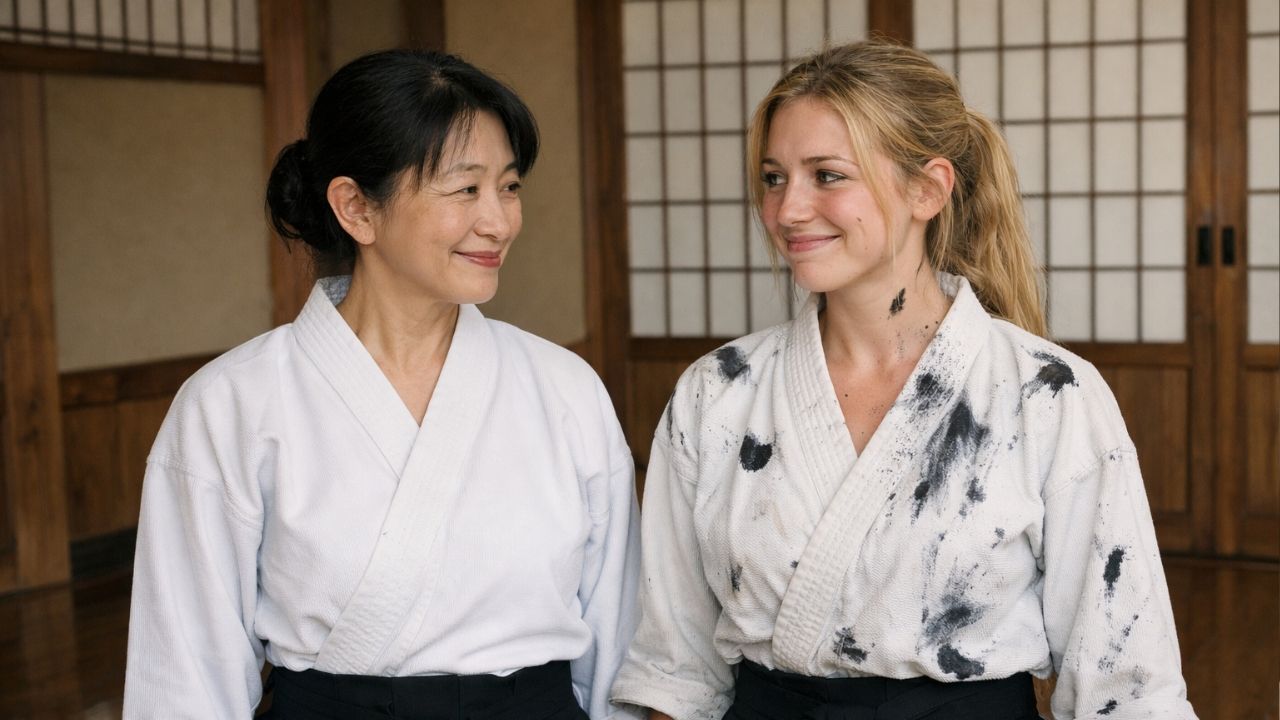
Ink Is Simple. The Consequences Are Not.
Ink does not negotiate.
A single drop can mark a desk for years, and a single brush touch can ruin clothing in seconds.
This is ordinary information, but it points to something deeper: in Zen Calligraphy, consequences reveal whether your practice has structure.
Why This Counts as Practice
Many people treat “the way” as posture, technique, or composure.
But the way also includes the conditions that hold the practice.
When you protect the surface, you are not being picky. You are removing a background threat that steals attention.
The Two-Layer Rule
Use a shitajiki under your paper. That is the baseline.
Then place an additional layer under the shitajiki.
Some hanshi absorb faster than expected. Bleed-through is not a mistake of skill. It is a property of materials.
The second layer turns uncertainty into stability. It protects the desk, and it protects your mind from managing risk while you write.
Paper Behavior Is Part of the Training Environment
Not all hanshi behave the same way.
Some hold the line cleanly. Some spread and darken quickly. Some invite hesitation because they punish small delays.
You do not solve this by “trying harder.” You solve it by seeing conditions clearly and responding without drama.
That is one definition of refinement: adjusting the environment so execution can remain stable.
Clothing: Remove the Need to Be Careful
Ink is difficult to remove. In most cases, it is better to assume it will not come out.
Wear something you can accept being marked, or use a simple apron.
This is not fear. It is subtraction.
When clothing creates anxiety, attention splits before the first stroke. When clothing is decided, attention stays whole.
Order Prevents Accidents Better Than Caution
Most “accidents” are not accidents. They are a messy sequence.
Tools scattered. Water too close. Paper shifting. A sleeve passing over wet ink.
Order is quieter than caution. It prevents problems without requiring self-control in the moment.
This is why a clean setup is not aesthetics. It is protocol.
A Minimal Setup Protocol
Before you begin, secure the surface with two layers.
Place paper and tools with enough space to move without rushing.
Decide clothing in advance, so you do not practice under hidden fear.
Then begin.
Practice Without Goals, Not Without Standards
Practice without goals does not mean practice without structure.
It means the value is not outside the session. The value is in how you return and how you refine.
Protecting your desk and clothing is a small standard that protects continuity.
Continuity is where quiet strength is built.
Closing: Clean Space Is Clean Attention
Ink discipline looks ordinary from the outside.
But internally, it changes the quality of practice. You learn to remove noise before it begins.
The way is not only in the stroke. It is also in the space that holds the stroke.